

Ingram Tribology Test Method Library
ITTM016 – Last Updated July 2026
Keywords: Mouthfeel, food, Biotribology, bolus, oral friction, tongue mimic, saliva mimic, sensory testing
Overview
The mouthfeel method is used to quantitively measure the mouthfeel-related friction in foods, food ingredients and food formulations.
When eating, food is mixed with saliva forming a bolus, which then lubricates the tongue, palate and other oral surfaces. These interactions contribute to sensory properties such as smoothness, creaminess, slipperiness, dryness, astringency, grittiness and coating.
The Food Mouthfeel and Oral Friction Testing method uses mouth-like surfaces, saliva mimics and relevant motion and load profiles to replicate the conditions in the mouth during oral processing. This resultant friction measurements can be used to compare formulations, investigate mouthfeel mechanisms, and support the interpretation of sensory panel results. This correlates to mouthfeel descriptors in panel testing. The method can be used as an accurate way to measure the sensations caused by foods during the eat process, without human bias.
Typical Applications
This method is typically used for:
- Foods
- Food ingredients
- Food formulations
- Plant-based foods
- Fat-reduced or sugar -reduced products
- Quality control
- Mouthfeel mechanism studies
- Comparison of formulation changes
Key Benefits
The test provides a controlled quantitative measurement of friction between mouth-like surfaces during a simulated eating cycle. This allows food scientists and product developers to investigate how ingredients, processing conditions and formulation changes influence mouthfeel-related lubrication.
The method can be used to support product development, compare prototype formulations, and investigate the effect of ingredient substitutions. It provides mechanistic insight to support sensory panel testing.
Test Method
The test consists of a smooth PDMS ball, mimicking the upper palate, rubbing against a textured PDMS plate, mimicking the tongue surface. The ball is loaded against the plate and can move within a 20 × 20 mm square, allowing different tongue-like motion profiles to be replicated.
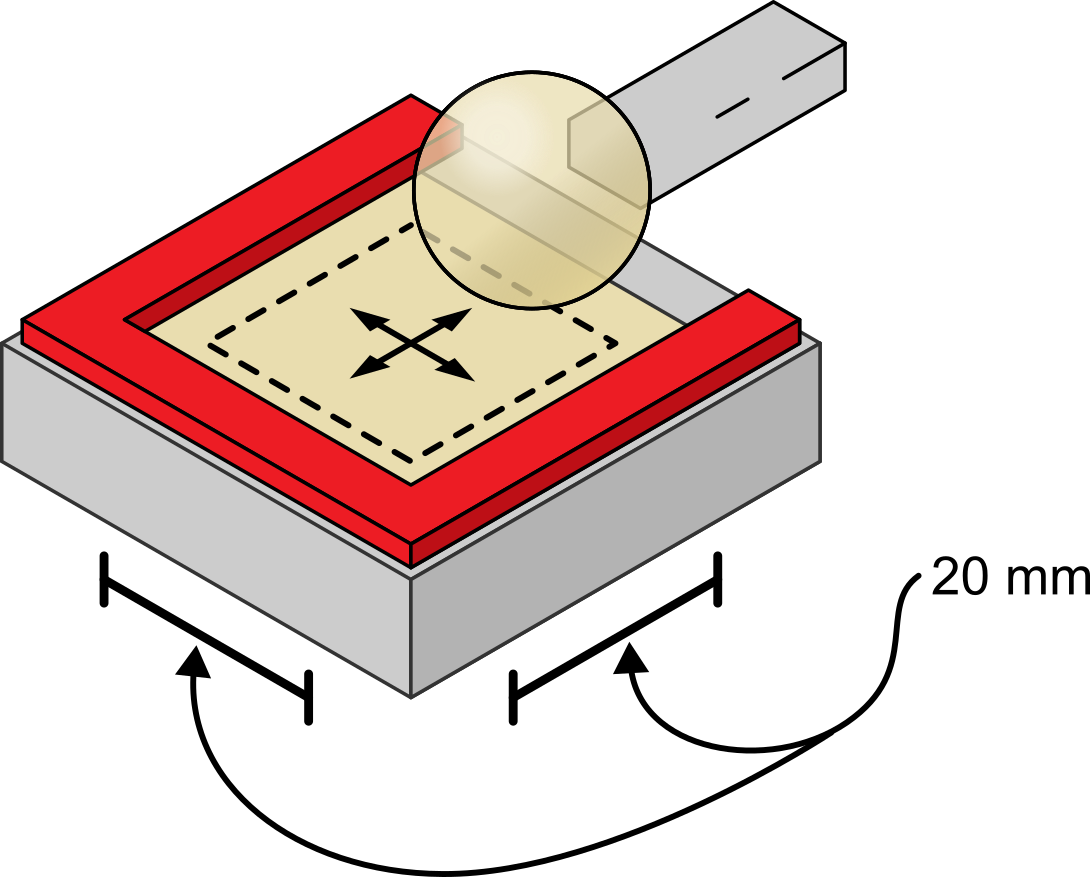
Figure 1: Diagram showing the test sample setup, with a PDMS ball loaded against a textured PDMS plate. The ball moves within an 20 × 20 mm area.
Three types of test sequences are used:
- Reciprocating: a simple reciprocating motion with a periodic lifting of the ball
- Wiggle 1: a reciprocating profile with a sinusoidal motion in the perpendicular direction, combined with periodic lifting of the ball
- Wiggle 2: a reciprocating and perpendicular sineusoidal motion, combined with cyclic loading
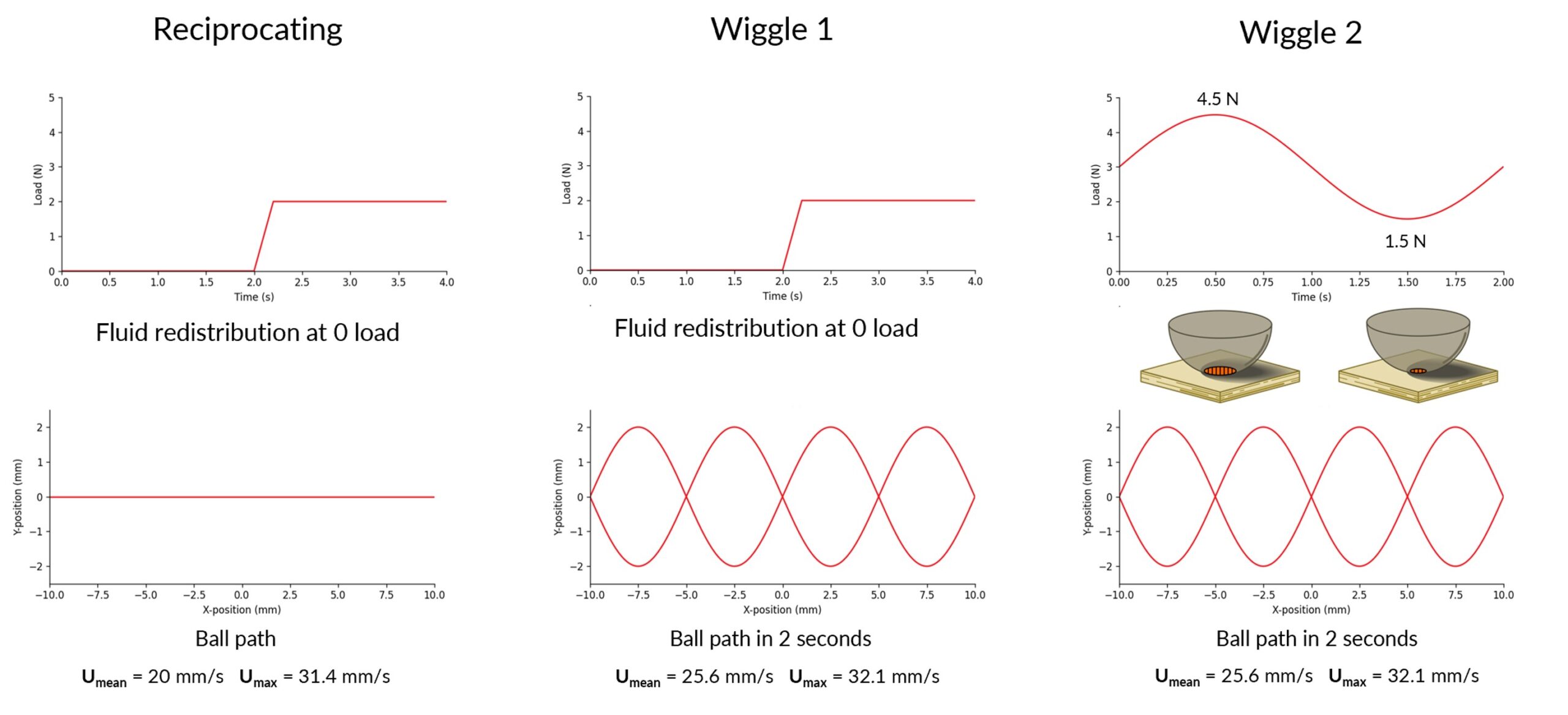
Figure 2: Diagrams showing the three test sequences employed for studying mouthfeel friction testing: Reciprocating, Wiggle 1 and Wiggle 2.
The ball is raised slightly above the plate during the zero-load or “lift” phase. This lifting allows the food bolus to re-enter the contact, which helps replicate aspects of the eating process where food is redistributed between oral surfaces.
Typical testing is conducted with a 2 N applied load, a temperature of 37 °C and the motion profiles shown in Figure 2.
Measurement
The main test outputs are:
- Raw friction measurements during the test cycles
- Average friction
- Static friction
- Friction response during the different test sequences
Together, these measurements provide insight into the lubrication behaviour of food boluses and how this changes during simulated oral processing.
Example Test Output
The example results below show friction measurements during the reciprocating profile for six different samples:
- Water (Deionised)
- Saliva Mimic
- Chocolate Bolus
- Savoury Snack Bolus
- Beef Protein Bolus
- Pea Protein Bolus
All the boluses are prepared by mixing the food with the saliva mimic at controlled concentrations, using a controlled mixing process. This forms a bolus with a similar texture and particle size distribution as human bolus samples.
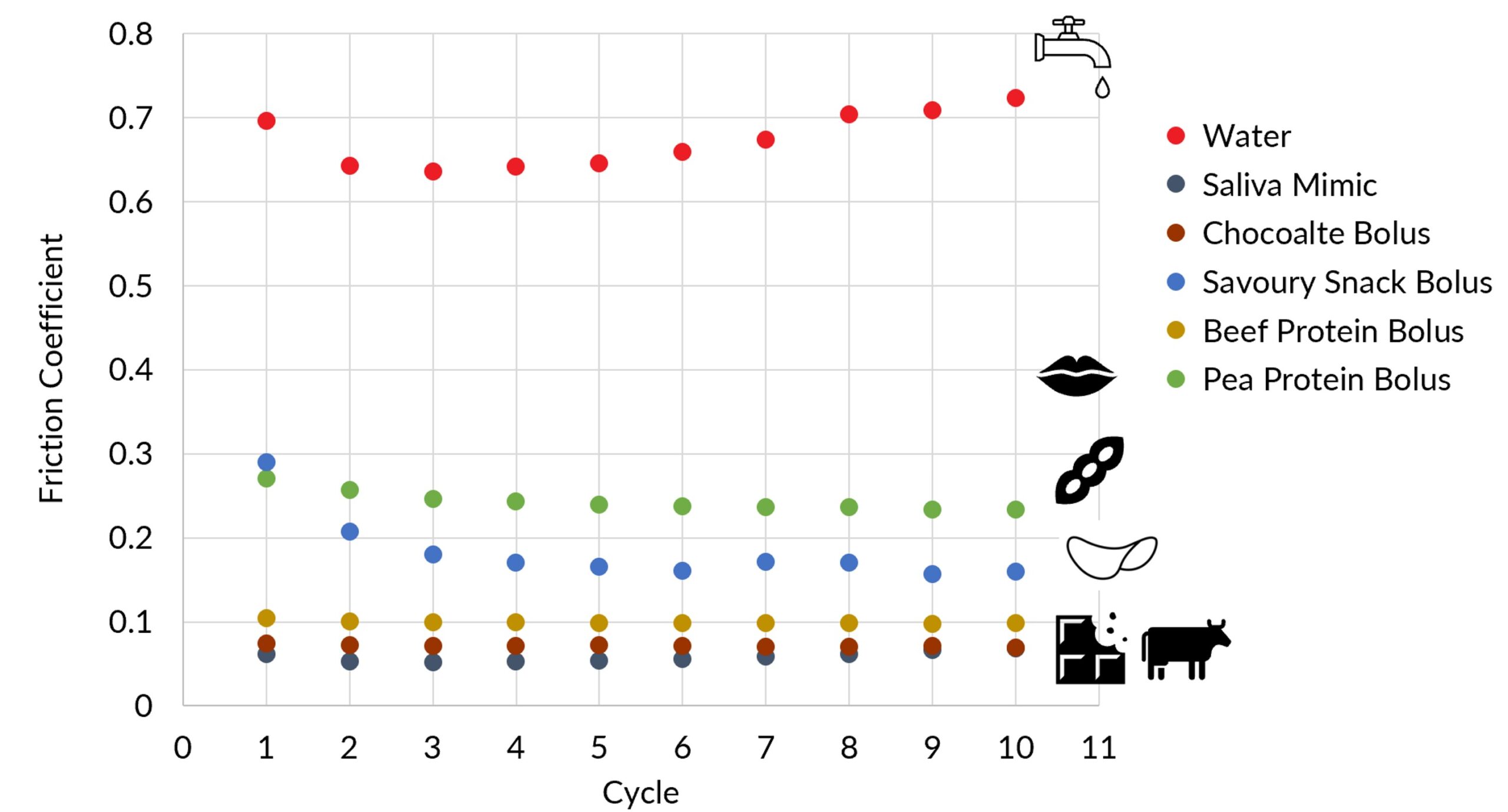
Figure 3: Example friction measurements for six samples during the reciprocating test profile.
Effect of Test Sequence
The measured friction of food boluses depends on the type of motion and load profile. Figure 4 shows an example using a savoury snack bolus, showing the effect of the three test sequences.
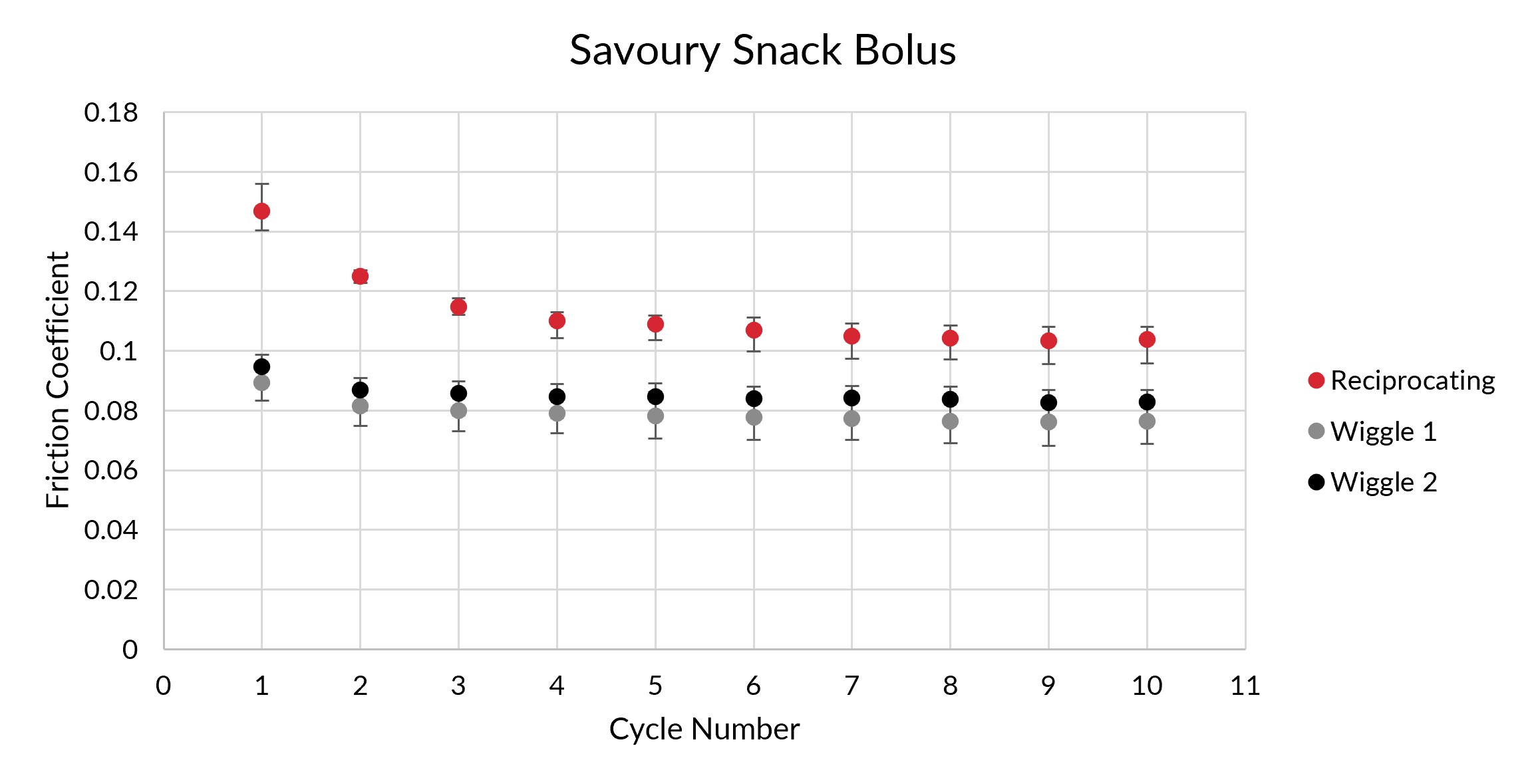
Figure 4: Example friction measurements for a savoury snack bolus during three different test sequences
The savoury snack bolus contains a mixture of starch, oil and water. The change in friction response between the test sequences is due to the way that the bolus is being entrained into the contact. The lift phase will allow large particles and viscous constituents to flow back into the contact, whilst the cyclic loading may reduce or alter this (wiggle 2). These effects are relevant to the eating process and can influence how the food is perceived in the mouth.
Summary
Mouthfeel testing of foods provides a controlled and relevant way to evaluate friction-related sensations experienced during eating. By using tongue mimics, saliva mimics and eating-relevant motion profiles, the method helps bridge the gap between instrumental testing and sensory perception.
The test is particularly useful for understanding how food structure, ingredient choice, particle content, viscosity and lubrication behaviour influence the experience of eating.
Additional or linked services:
This method can be combined with additional surface and failure analysis techniques, including:
- ITTM017: Biotribology Stribeck Curves
- ITTM046: Mouthfeel Testing of Foods During the Eating Cycle
- Biotribology For Industry Training Course
Book a Test
Testing services can also be booked directly via the Ingram Tribology website: https://ingramtribology.com/request-a-test/
Order code: ITTM016
For more information or to discuss a test programme, please contact: [email protected]
Further Reading
Food production Ingram Tribology page