

Ingram Tribology Test Method Library
ITTM046 – Last Updated September 2026
Keywords: Mouthfeel, food, biotribology, bolus, oral friction, tongue mimic, saliva mimic, sensory testing, oral processing
Overview
ITTM046 quantitively measures mouthfeel friction in foods, food ingredients and food formulations, during a simulated eating cycle.
When eating, food is progressively broken down, sheared and mixed with saliva to form a bolus. The properties of the bolus continually change as oral processing progresses, including average particle size, structure, viscosity and saliva concentration. These changes affect the lubrication between the tongue, palate and other oral surfaces where they can contribute to mouthfeel sensations such as smoothness, creaminess, slipperiness, dryness, astringency, grittiness and coating.
ITTM046 simulates key stages of this dynamic process by measuring friction in a mouth-like contact, using food boluses prepared to simulate different stages of controlled food breakdown and saliva dilution. This allows changes in lubrication behaviour to be followed throughout a simulated eating cycle, rather than measuring the food at only a single condition.
This method builds on ITTM016 – The Food Mouthfeel and Oral Friction Testing, using compliant mouth-like surfaces, a saliva mimics and relevant motion and load profiles. ITTM046 extends this approach by incorporating controlled food processing and food/saliva ratios representative of different stages of oral processing.
Typical Applications
This method is typically used for:
- Food products
- Food ingredients
- Food formulations
- Plant-based foods
- Alternative proteins
- Fat-reduced or sugar-reduced products
- Ingredient substitution studies
- Quality control
- Mouthfeel mechanism studies
- Comparison of formulation changes
Key Benefits
ITTM046 provides a controlled, quantitative measurement of friction between mouth-like surfaces as the properties of a food bolus change during a simulated eating cycle.
Rather than characterising a food at a single condition, the method investigates how lubrication develops as the food is broken down, sheared and progressively mixed with saliva mimic. This can reveal differences between products and trends over eating time that may not be apparent from a single friction or viscosity measurement.
The method can help food scientists and product developers investigate how ingredients, processing conditions and formulation changes affect mouthfeel-related lubrication throughout oral processing.
Applications include comparing prototype formulations, investigating ingredient substitutions, understanding the effects of fat or sugar reduction, and studying the mechanisms responsible for differences between products.
The measurements provide mechanistic information that can be used alongside sensory panel testing, rheology and other food characterisation techniques to build a more complete understanding of product mouthfeel.
Test Method
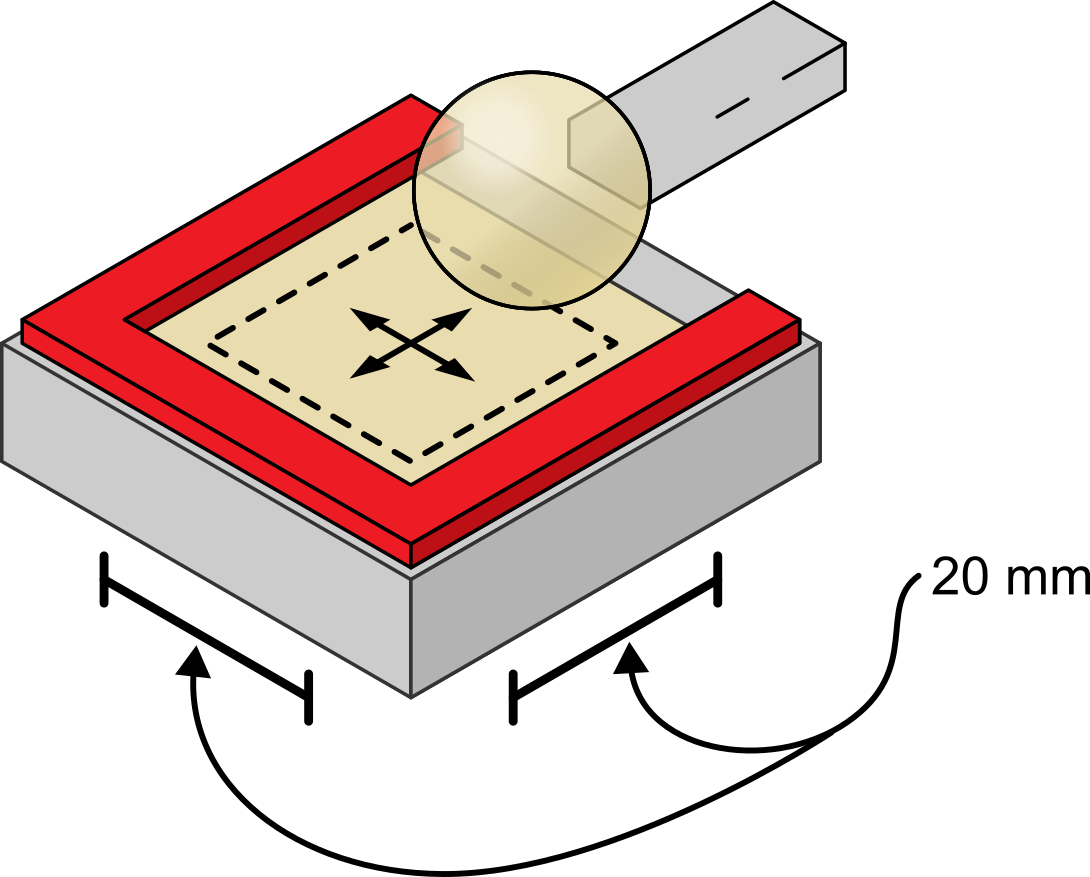
The test consists of a smooth PDMS ball, mimicking the upper palate, rubbing against a textured PDMS plate, mimicking the tongue surface. The ball is loaded against the plate and can move within a 20 × 20 mm square, allowing different tongue-like motion profiles to be replicated.
Tongue Mimic
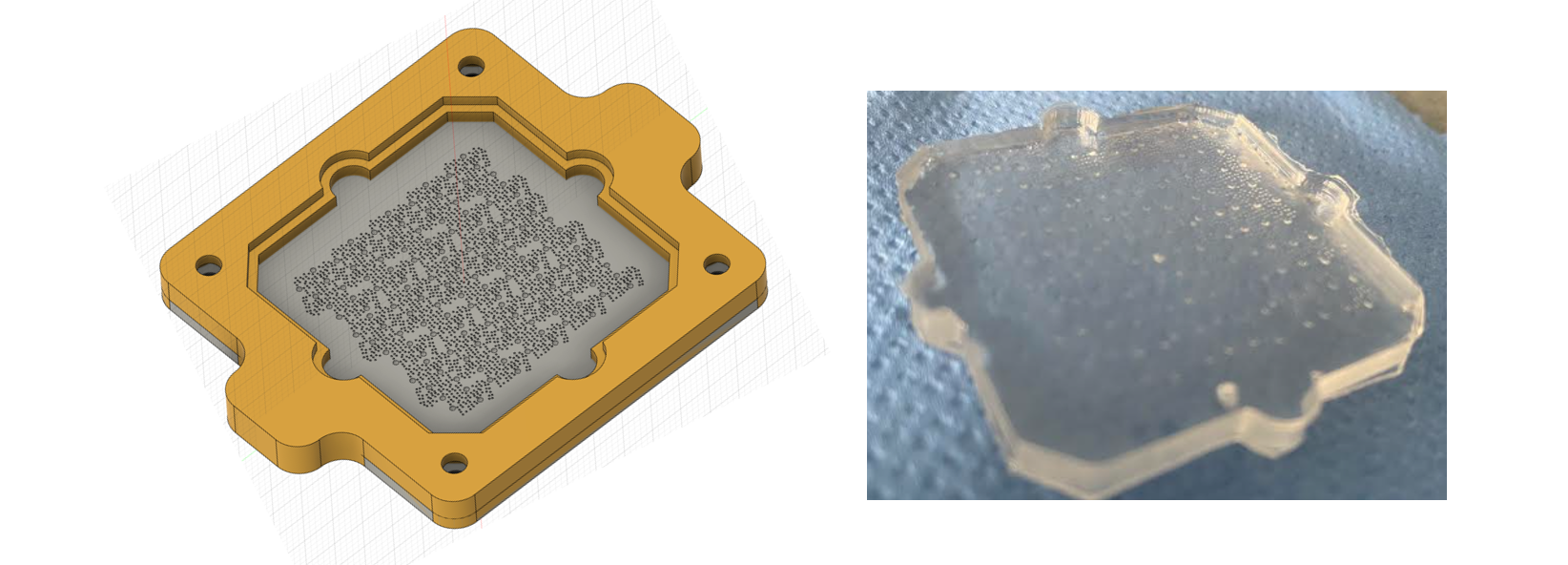
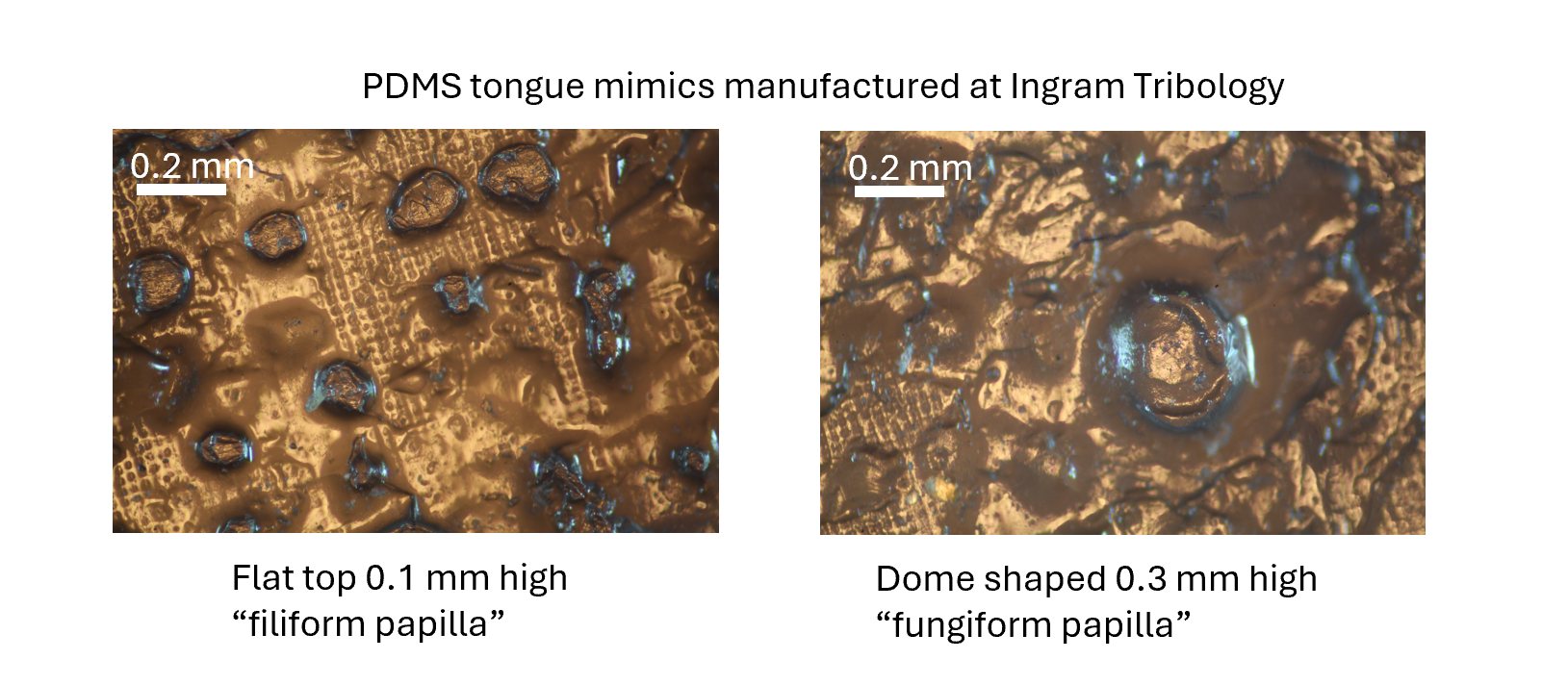
The tongue mimic surfaces are manufactured from PDMS and contain surface features representative of the filiform and fungiform papillae found on the human tongue (Figure 2 and 3).
Replicating the compliant and textured nature of the tongue provides a more physiologically relevant contact for investigating the lubrication behaviour of foods than conventional hard engineering surfaces.
Food Processing
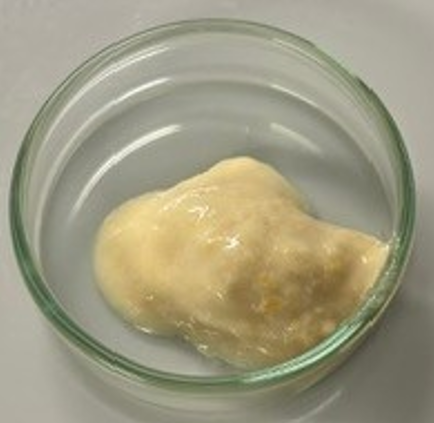
For ITTM046, the food is processed using a controlled preparation method and mixed with a saliva mimic to produce test boluses representative of different stages of the eating cycle.
The degree of food breakdown and food-to-saliva ratio can be systematically varied, allowing the evolution of lubrication behaviour during simulated oral processing to be investigated.
Measurement
The main test outputs are:
- Friction throughout the simulated eating cycle
- Average friction
- Static friction
- Changes in friction with food breakdown
- Changes in friction with increasing saliva concentrations
Together, these measurements provide insight into how the lubrication behaviour of food changes as it progresses through simulated oral processing.
Example Test Output
The example results below show the simulated mouthfeel friction for three different chocolates:
- British Milk Chocolate
- Dark Chocolate
- European Milk Chocolate
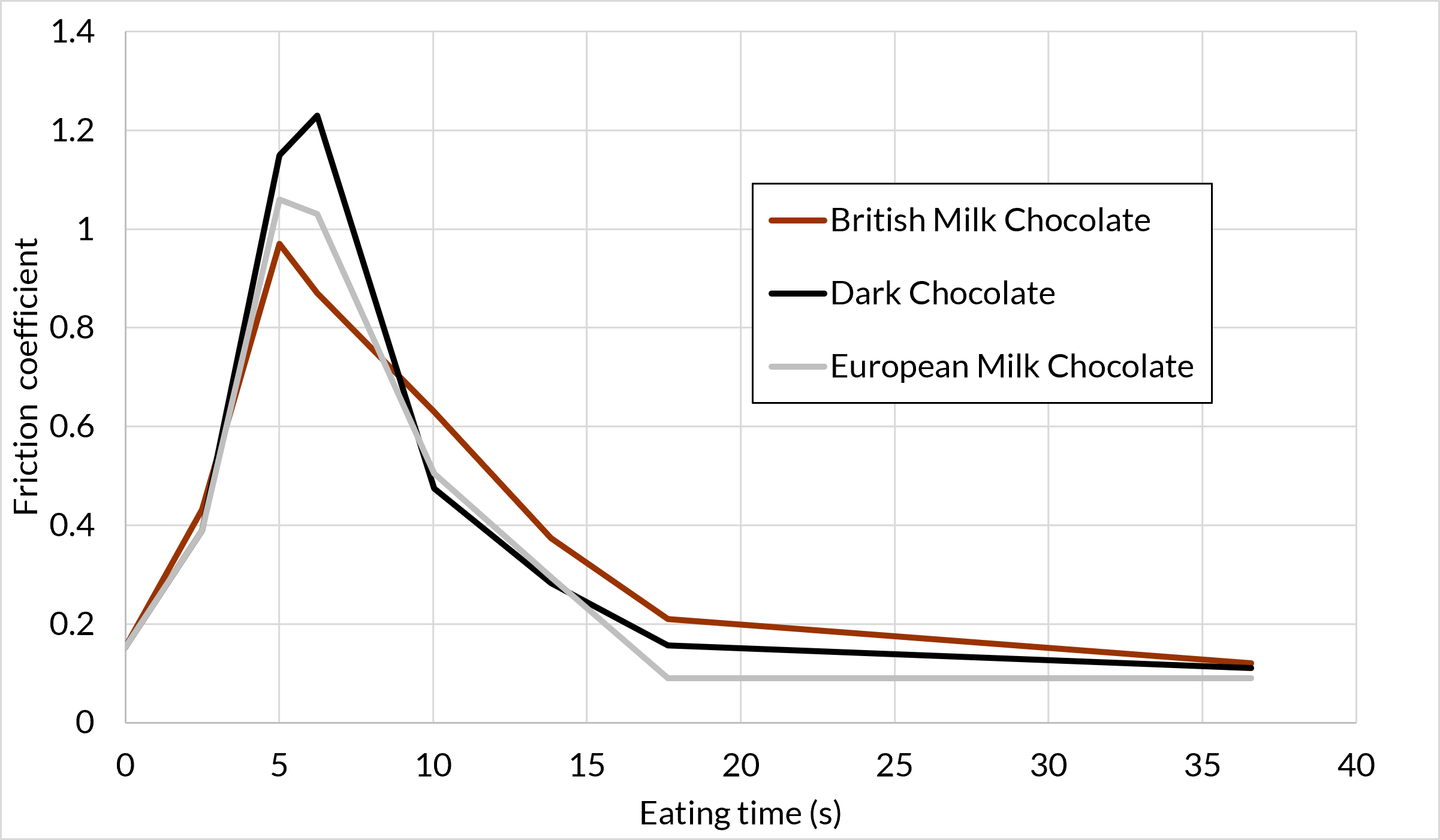
At time zero the contact is lubricated with saliva only. When the food is added, the lubrication characteristics are dictated by the bulk food moving around between the tongue and the palate. Between time 5 and 15 seconds, the measured friction is dominated by the mixture between the saliva mimic and the food product. As the concentration of the saliva mimic increases, the saliva mimic friction again begins to dominate, and friction returns to the baseline.
Here we see the changes of the measured friction of three chocolates during the eating cycle, and how they impact the sensations of the eater at the different stages.
The three chocolates show different friction profiles throughout this process. Comparing these profiles allows differences in lubrication behaviour to be identified not only in the initial food, but also as the products are processed and diluted during the simulated eating cycle.
Summary
ITTM046 provides a controlled and relevant method to evaluate mouthfeel-related friction during a simulated eating cycle. By combining the tongue mimics, saliva mimics, controlled food breakdown and eating-relevant motion profiles, the method allows changes in food lubrication as oral processing progresses.
This dynamic approach can provide information that is not available from measurements performed on the unprocessed food alone and is particularly useful for formulation development, ingredient substitution and comparative product studies.
The test is particularly useful for understanding how food structure, ingredient choice, particle content, viscosity and lubrication behaviour influence the experience of eating.
The method can be used alongside sensory testing, rheology and other food-characterisation techniques to help connect formulation and physical properties with the mechanisms contributing to mouthfeel.
Additional or linked services:
This method can be combined with:
- ITTM016: Food Mouthfeel and Oral Friction Testing
- ITTM017: Biotribology Stribeck Curves
- Biotribology For Industry Training Course
Book a test
Testing services can also be booked directly via the Ingram Tribology website: https://ingramtribology.com/request-a-test/
Order code: ITTM046
For more information or to discuss a test programme, please contact: [email protected]
Further Reading
Alternative protein blog article
ScienceDirect Mouthfeel summary
Tribology test design for friction measurements with application to oral medicines