

Ingram Tribology Test Method Library
ITTM017 – Last Updated July 2026
Keywords: Biotribology, Stribeck curves, friction, lubrication, mouthfeel, skin feel, soft surfaces, consumer products, foods, cosmetics, personal care.
Overview
The Biotribology Stribeck Curve method measures the frictional response of a test sample over a controlled range of speeds. The resulting Stribeck curve shows how the sample controls friction across the different lubrication regimes.
In Biotribology, knowing how friction varies across the lubrication regime is useful for understanding how foods, cosmetics, personal care products, medical products and other soft-contact materials lubricate surfaces.
Biotribology Stribeck curves are commonly used to compare formulations, investigate lubrication mechanisms and identify how ingredients influence friction under boundary, mixed and hydrodynamic lubrication conditions.
Typical Applications
This method is typically used for:
- Foods
- Food ingredients
- Food formulations
- Plant-based proteins
- Beverages
- Cosmetics and personal care products
- Cosmetic ingredients
- Skin creams, lotions and gels
- Medical devices
- Mechanism studies
- Formulation screening
Key Benefits
The test provides a controlled and established way to compare the lubrication behaviour of different formulations. The method shows how a product behaves across different lubrication regimes by measuring friction over a range of speeds in a soft contact.
Providing more information than a single friction measurement. It allows food scientists, cosmetic scientists, formulation chemists and product developers to understand how their products perform under conditions relevant to use. For foods, the method can support investigation of mouthfeel-related friction. For cosmetics and personal care products, it can support studies of skin feel, spreading behaviour and sensory perception.
Test Method
The test consists of a PDMS ball rolling and sliding against a PDMS disc. Low loads are used to mimic the conditions of many Biotribology applications.
The temperature, load and speed are accurately controlled. The speed is varied over a large range, and the sweep maybe repeated multiple times to generate a Stribeck curve.
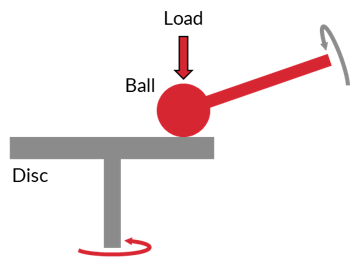
Figure 1: Diagram showing the test sample setup, with a PDMS ball loaded against a PDMS disc.
Lubrication Regimes
A Stribeck curve can provide information about the different lubrication regimes:
- Boundary lubrication: friction is mainly controlled by surface interactions and adsorbed films
- Mixed lubrication: friction is controlled by both surface interactions and partial fluid film being sheared
- Hydrodynamic lubrication: friction is controlled by the viscosity and shear behaviour of the sample
In biological and consumer product applications, these regimes may relate to different stages of their use. For example, a product may move between different lubrication regimes as it is spread on the skin, or diluted with saliva, mixed into a bolus or sheared during application.
The position and shape of the curve provide useful performance information: If the curve is shifted to the right, the product is more likely to operate in the boundary and mixed regime, with higher friction. If it is shifted to the left, the product is more likely to operate in the hydrodynamic and mixed regime, with lower friction.
Measurement
The main test outputs are:
- Friction coefficient as a function of speed
- Mixed regime friction
- Boundary friction
- Hydrodynamic friction
- Stribeck curve normalised for viscosity
- Evolution of curve over time
Example Biotribology Stribeck Curves
The examples below show how Biotribology Stribeck curve testing can be used to study beverage, foods, experimental formulations and cosmetic products.
Beverages
Biotribology Stribeck curves can be used to compare the frictional performance of beverages. Here we compare the performance of four samples:
- Deionised water (control)
- Helles Beer – a common beer style
- Hot chocolate – a mixture of milk and cocoa powder
- Irish Cream – A liquor of stabilised cream, whiskey and flavourings
The Biotribology Stribeck Curves were measured at 3 N, load and 50 % slide-to-roll ratio and are shown in Figure 2:
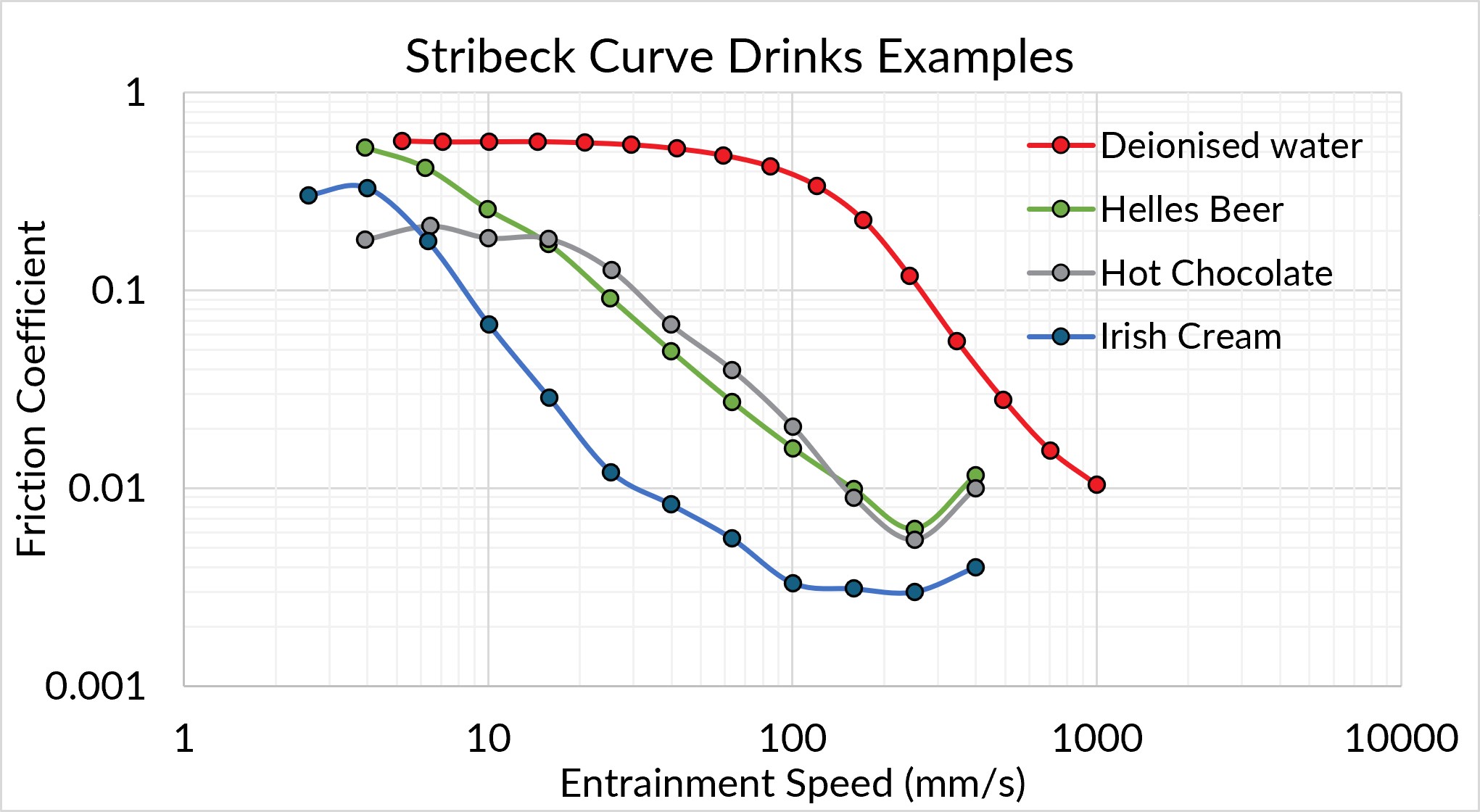
Figure 2: Example Biotribology Stribeck Curves for some common beverages.
All three beverages reduce friction across the speed range compared with deionised water. Irish Cream has the lowest friction, which is likely to be influenced by its high cream content, emulsifiers and relatively high viscosity. The higher viscosity also shifts the curve to lower speeds.
The Beer and Hot Chocolate sample show similar friction levels. Although the hot chocolate has higher in viscosity, it also contains solid particles which may contribute to increased friction in some parts of the curve.
Foods
Biotribology Stribeck curves can also be used to study the frictional performance of foods, either in neat form or as an artificial bolus.
The examples shown below include:
- Deionised water (control)
- Milk chocolate bolus – a mixture of molten chocolate and a saliva mimic
- Cream cheese bolus – a mixture of heated cream cheese and a saliva mimic
- Camembert cheese – a creamy cheese, baked and tested neat
- Cranberry sauce – a mixture of cranberries, sugar and water, tested neat
The Biotribology Stribeck Curves are measured at 3N load, and 50% slide-to-roll ratio, shown below in Figure 3:
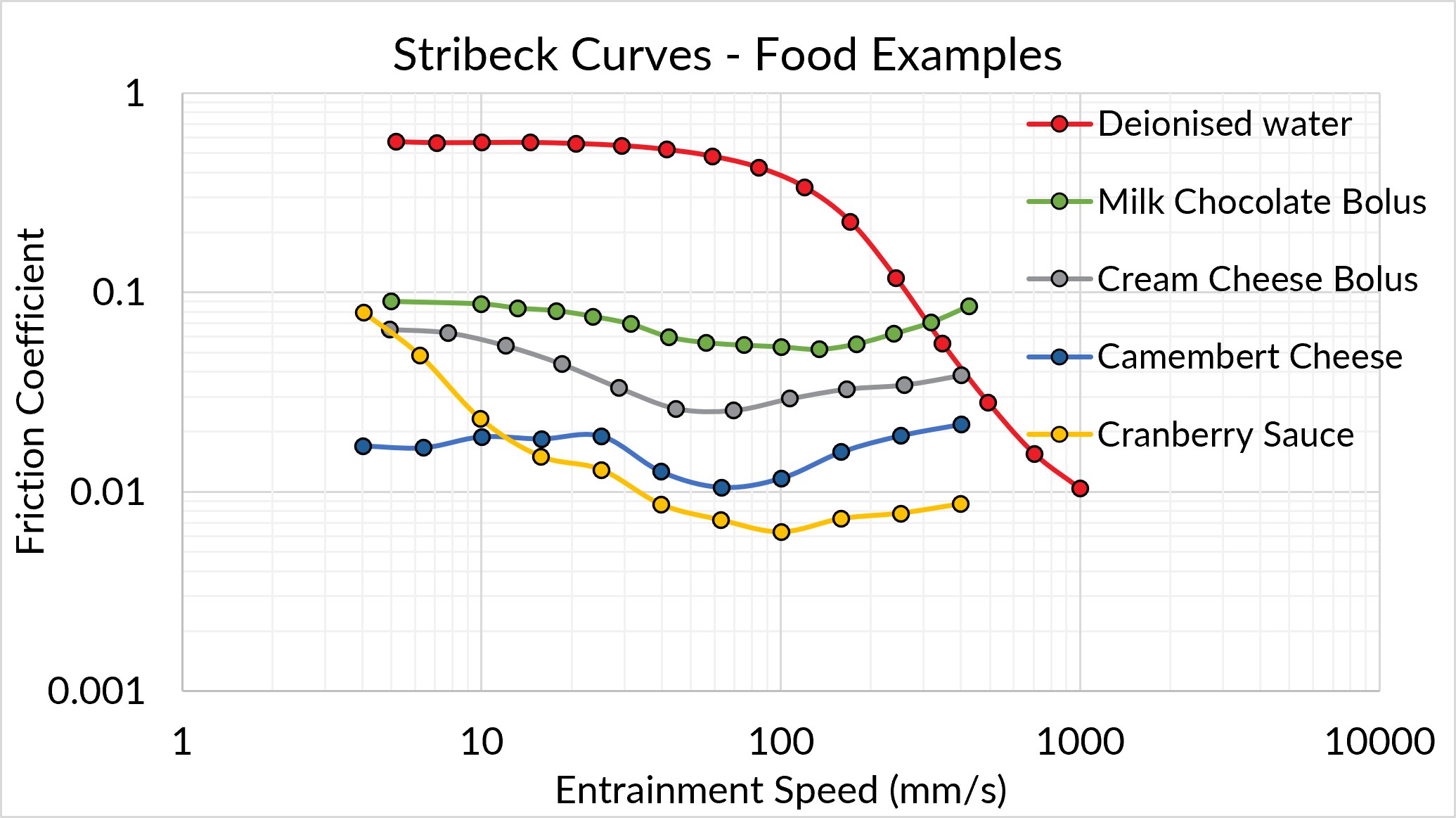
Figure 3: Example Biotribology Stribeck Curve for some common foods
All the food and simulated bolus samples reduce friction and change the shape of the curve compared to deionised water. They all lower the friction in the mixed regime and prevent the initiation of boundary conditions.
In this example, Cranberry Sauce shows the lowest overall friction whilst the Milk Chocolate Bolus shows the highest overall friction among the food samples tested. The frictional differences are relevant to mouthfeel and may contribute to different sensory experiences during eating.
Formulation Differentiation
Biotribology Stribeck curves can be used to measure relatively small changes between different formulations.
The example below compares:
- Deionised water (control)
- Sample 1 – higher friction formulation
- Sample 2 – lower friction formulation
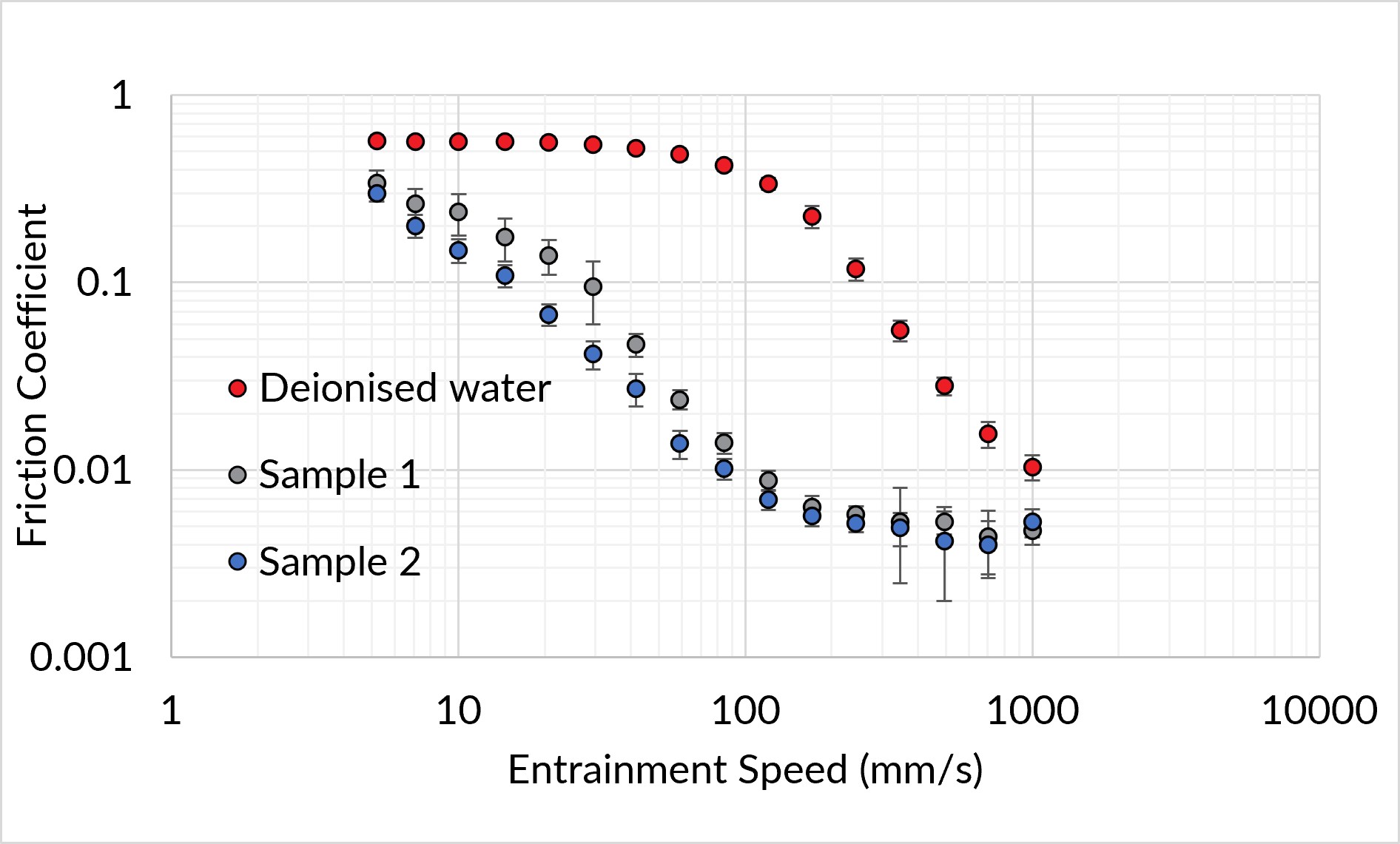
Figure 4: Example Biotribology Stribeck curves for a control and two experimental samples.
Both experimental food samples reduce friction in the mixed regime, compared with deionised water. They also have the effect of moving the curve to the left, relative to the deionised water. This is probably due to an increase in viscosity for the two samples relative to the deionised water.
The Biotribology Stribeck also show a small difference between the two experimental samples, with Sample 2 showing slightly lower mixed-regime friction throughout the speed range. These small differences can be important in formulation development as they can be sensed by the human during eating and it is therefore useful to measure them accurately.
Cosmetics
Biotribology Stribeck curves can also be used to measure the frictional response of cosmetic products and ingredients. This helps show how the friction of a cosmetic formulation changes across different lubrication regimes. In the example here six samples are tested:
- Deionised water
- Body lotion – a common body cream
- Almond oil
- Coconut oil
- Dimethicone (Silicone oil)
- Baby oil – containing mineral oil and isopropyl palmitate
All the samples were studied at 3N load, 150 % slide-to-roll ratio and 23 °C. The results are shown in Figure 5 below:
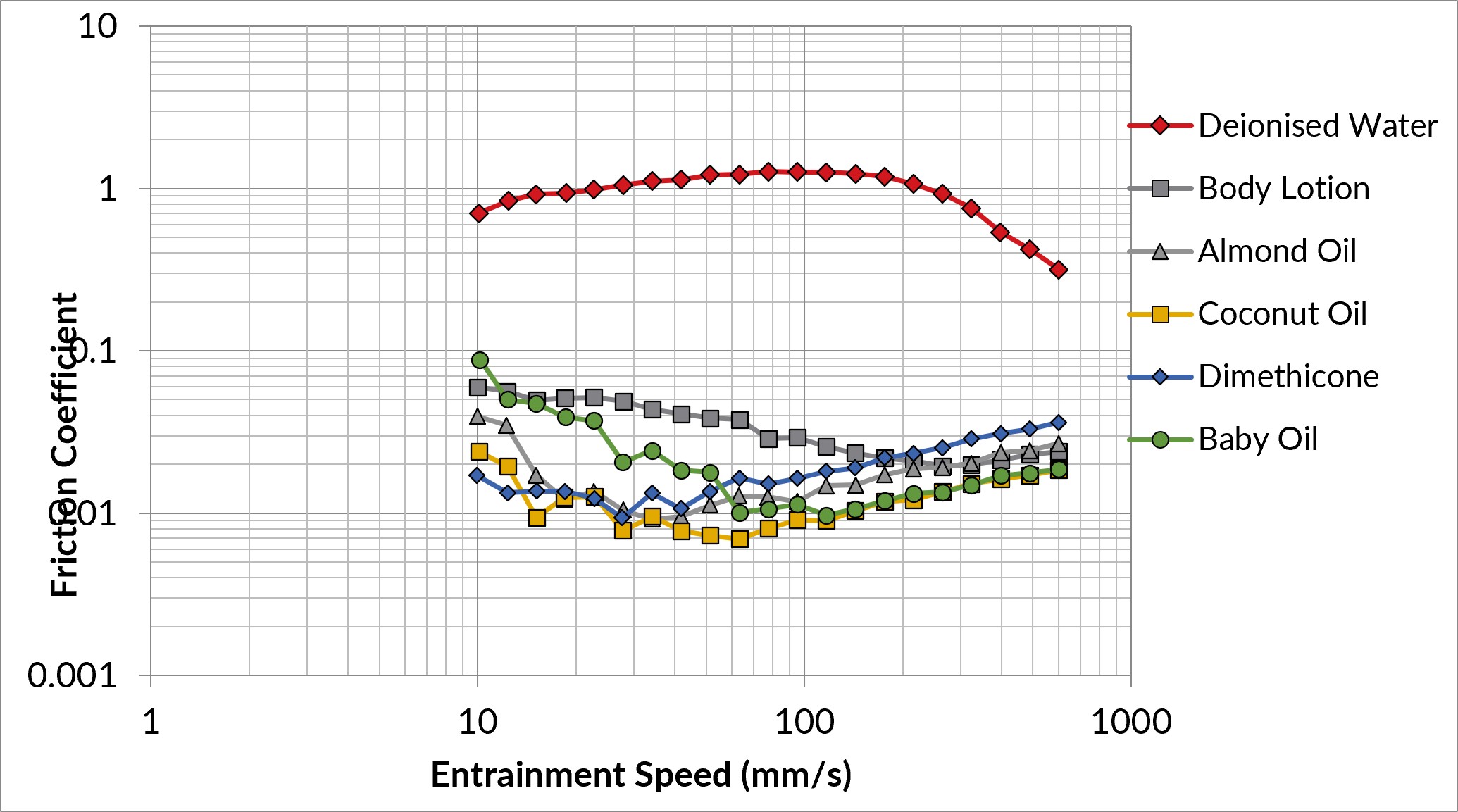
Figure 5: Biotribology Stribeck curves for six cosmetic products and ingredients
All five cometic samples reduce friction compared with the deionised water control. For many cosmetic applications, the area of interest is between approximately 20 and 200 mm/s, which is representative of typical application speeds.
Within this speed range of interest, the samples show a large variation in friction. In this example, the Body Lotion shows the highest friction, while Coconut Oil shows the lowest friction. This indicates that the products are likely to produce different sensory responses during application and use.
Because the samples have a wide range of viscosity, the results can be replotted using viscosity-adjusted speed. This helps separate the effect of viscosity from other formulation effects. The results are shown in Figure 6:
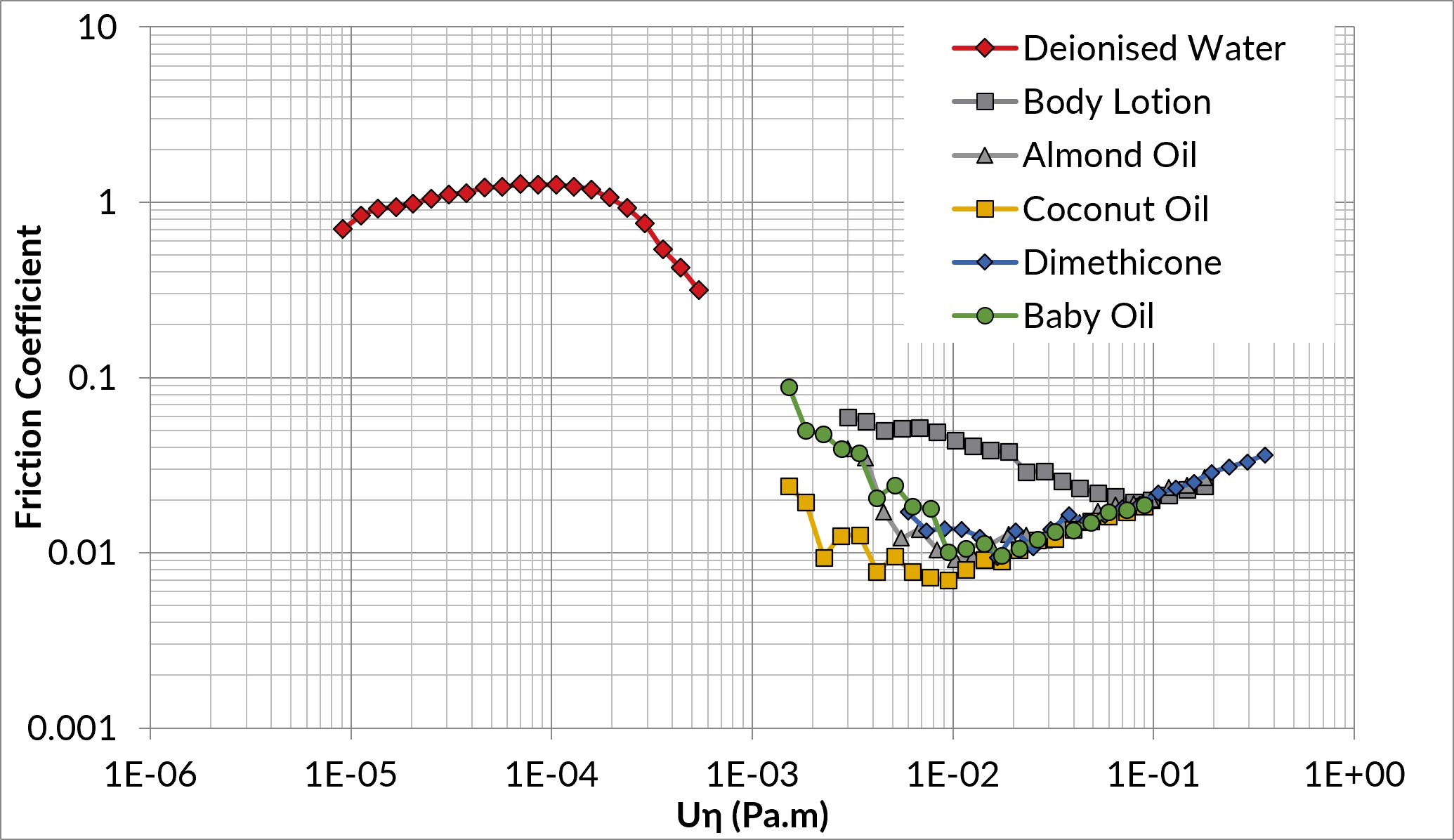
Figure 6: Biotribology Stribeck curves for six cosmetic samples, normalised for viscosity.
In this format, the full shape of the Stribeck curve becomes clearer, showing the main lubrication regimes of boundary, mixed and hydrodynamic lubrication.
This allows product performance to be evaluated beyond the effect of viscosity alone. In this example the Body Lotion has the effect of increasing the friction in the mixed regime, while Coconut Oil appears to reduce it.
Summary
Biotribology Stribeck Curves Testing is a useful tool for studying the frictional performance of foods, cosmetics and other bio-samples. The method gives an indication of their absolute Biotribology response and can be used to infer their performance on the body – whether that is mouthfeel for foods, or sensory perception for cosmetics.
The method can be used to support product development, ingredient selection, mouthfeel studies, skin feel studies and sensory interpretation. It is particularly valuable when combined with sensory panel testing, rheology, viscosity measurement and application-specific friction tests.
Additional or linked services:
This method can be combined with additional services and techniques, including:
- ITTM016: Food Mouthfeel and Oral Friction Testing
- ITTM046: Mouthfeel Testing of Foods During the Eating Cycle
- ITTM047: Sensory Perception Measurement of Cosmetics
- Biotribology For Industry Training Course
Book a Test
Testing services can also be booked directly via the Ingram Tribology website: https://ingramtribology.com/request-a-test/
Order code: ITTM017
For more information or to discuss a test programme, please contact: [email protected]
Further Reading
Ingram Tribology Food Production Page