

Ingram Tribology Test Method Library
ITTM001 – Last Updated, July 2026
Keywords: Micropitting, gear, FZG, FVA54/7, profile deviation, grey flecking
Overview
The Micropitting Performance of Gear Lubricants method rates lubricants in terms of their ability to reduce or prevent micropitting wear on gear contacts. The method closely follows the contact conditions of the standardised FZG gear micropitting test (FVA 54/7, DIN 3990 part 16), and is designed to act as a cost-effective screening method before full-scale gear testing.
The method allows lubricant additive packages and finished lubricant formulations to be compared under controlled rolling/sliding contact conditions that promote micropitting damage.
Typical Applications
This method is typically used for:
- Industrial gear oils
- Wind turbine gear oils
- Automotive transmission fluids
- Hydraulic fluids
- Lubricant additive screening
- Investigation of micropitting control mechanisms
Key Benefits
The test provides a fast, tightly controlled and cost-effective way to compare lubricant performance in relation to micropitting wear. It can be used to identify promising formulations, compare additive technologies, and reduce the number of candidates taken forward into more expensive full-scale gear testing.
The method also provides additional insight into the lubrication mechanism by measuring friction and vibration alongside monitoring surface damage visually throughout the test.
Test Method
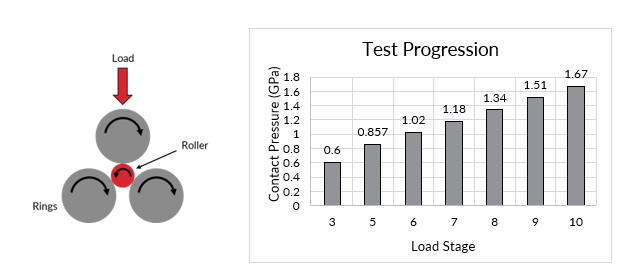
The test consists of three rings running against a central test roller over seven different load stages. At each load stage the contact conditions become progressively more severe through increased contact pressure and decreased speed.
Measurements
The main test outputs are:
- Microscopy images showing micropitting progression
- Roller profile deviation (radius loss) – monitors wear progression
- Roller weight loss
- Friction coefficient
- Vibration response
Together, these measurements allow lubricant performance to be ranked and provide insight into the mechanisms controlling micropitting damage.
Example Test Output
The example below compares a low and high performing reference oil, Reference oil A and B respectively.
Micropitting Progression
A series of microscopy images are taken from the surface of a test roller to show the progression of micropitting wear during the test. The images show how damage develops with increasing load stage and allow visual comparison between the two reference oils (Fig.1).
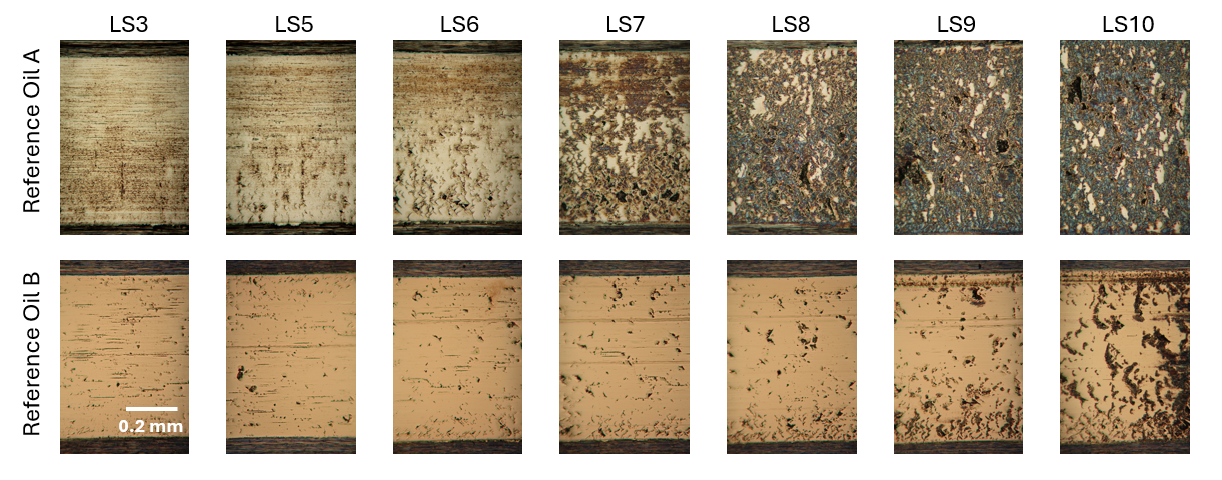
Figure 1: Example images of the roller surface, showing the progression of micropitting wear of the two reference oils.
Profile Deviation
The test also measures the profile deviation of the test roller sample, providing a quantitative measurement of micropitting wear.
In the example test (Figure 2), Reference Oil B has a relatively low profile deviation, compared to the Reference Oil A. This shows that Reference Oil A produces significantly greater micropitting wear.
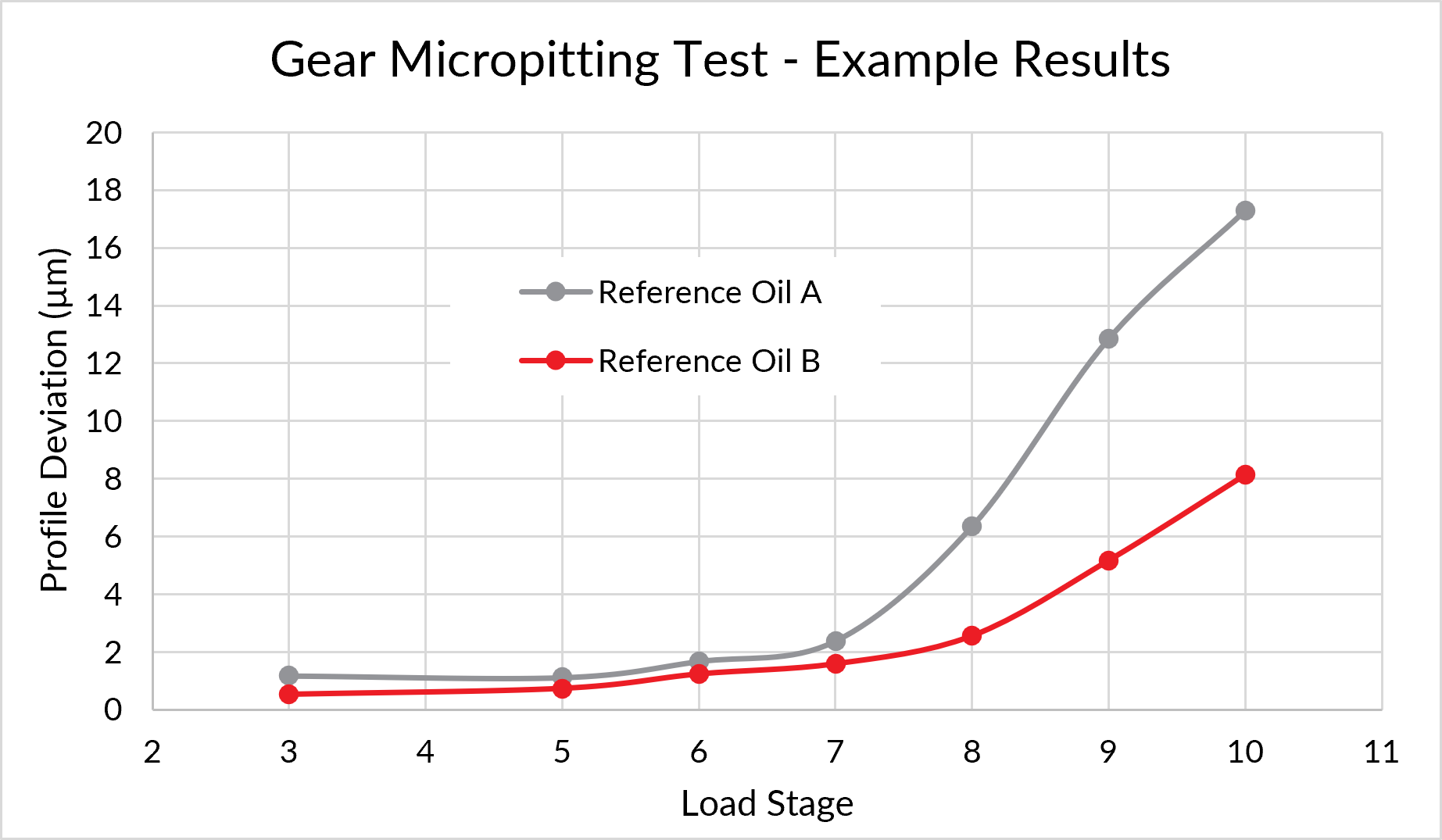
Figure 2: The measured Profile Deviation of the test roller for the two reference oils.
Friction Coefficient
The friction between the roller and rings is measured throughout the test. This information can provide insight into the mechanism of micropitting control. In the example shown in Figure 3, Reference Oil A shows higher friction throughout the test, which is probably contributing to the increased micropitting wear.
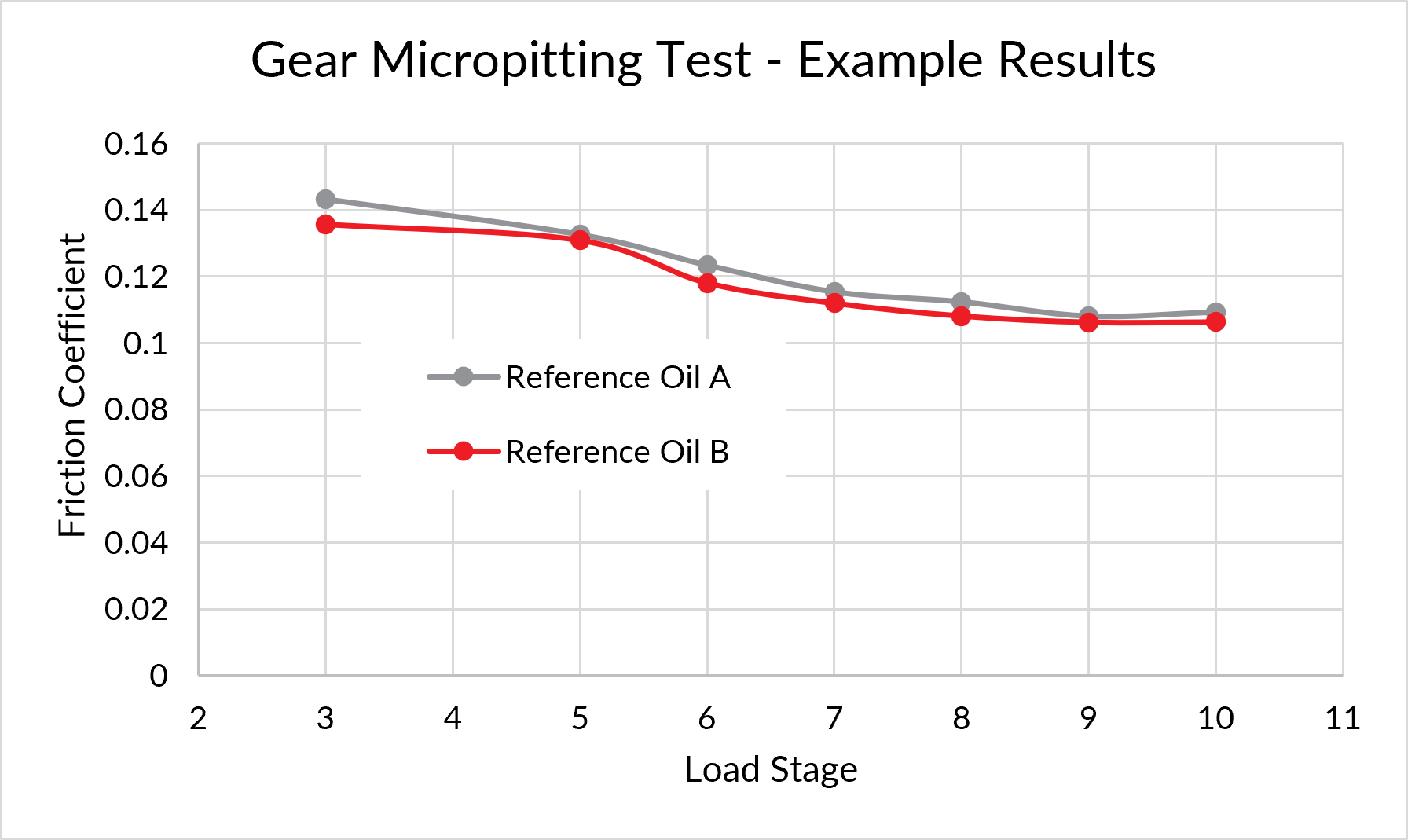
Figure 3: Measured friction coefficient throughout the test for the two reference oils.
Summary
The micropitting performance of gear lubricants test method is used to quickly and accurately compare lubricant formulations intended for gear applications. Ensuring their ability to protect against micropitting wear. This method is a cost-effective and fast, taking 4 days. The method is currently being considered for standardisation by the ASTM D02 group.
Additional or linked services:
This method can be combined with additional surface and failure analysis techniques, including:
- Optical Profilometry – to give further information on surface features such as micropit size and density
- SEM / SEM EDX – to investigate any tribofilms on the surface and their composition
- Subsurface analysis – to observe the cracks and pits and to measure their depth into the material
Book a Test
Testing services can also be booked directly via the Ingram Tribology website: https://ingramtribology.com/request-a-test/
Order code: ITTM001
For more information or to discuss a test programme, please contact: [email protected]
Further Reading
Micropitting Screener Test Blog Post