

Keywords: Mouthfeel, food tribology, biotribology, oral friction, protein isolates, alternative proteins, saliva mimic, sensory testing
Overview
Mouthfeel is an important part of how consumers experience food and drink. During eating, food mixes with saliva to form a bolus, which moves between the tongue, palate and other oral surfaces. The way this bolus lubricates these surfaces contributes to sensory attributes including smoothness, creaminess, slipperiness, dryness, astringency, grittiness and coating.
Protein ingredients can have a significant effect on these sensations. This is particularly important in the development of high-protein and plant-based foods, where undesirable dryness, roughness or astringency can reduce consumer acceptance (1).
In this study, Ingram Tribology’s Food Mouthfeel and Oral Friction Testing method (2) was used to compare three animal and two plant-derived protein isolates. The method uses tongue and palate-mimicking surfaces, a saliva mimic, and controlled motion and loading conditions to measure friction under simulated oral-processing conditions.
The results demonstrate how instrumental mouthfeel testing can help food developers:
- Compare protein ingredients
- Identify formulations associated with higher or lower oral friction
- Investigate the mechanisms behind dryness, smoothness and lubrication
- Screen formulations before sensory-panel testing
- Provide objective data to support sensory and product-development programmes.
Test Method
The test uses a smooth polydimethylsiloxane (PDMS) ball, to represent the upper palate and a textured PDMS plate to represent the tongue surface.
The ball is loaded against the plate and can move within a 20 × 20 mm square. This allows controlled tongue-like motion and load profiles to be replicated.
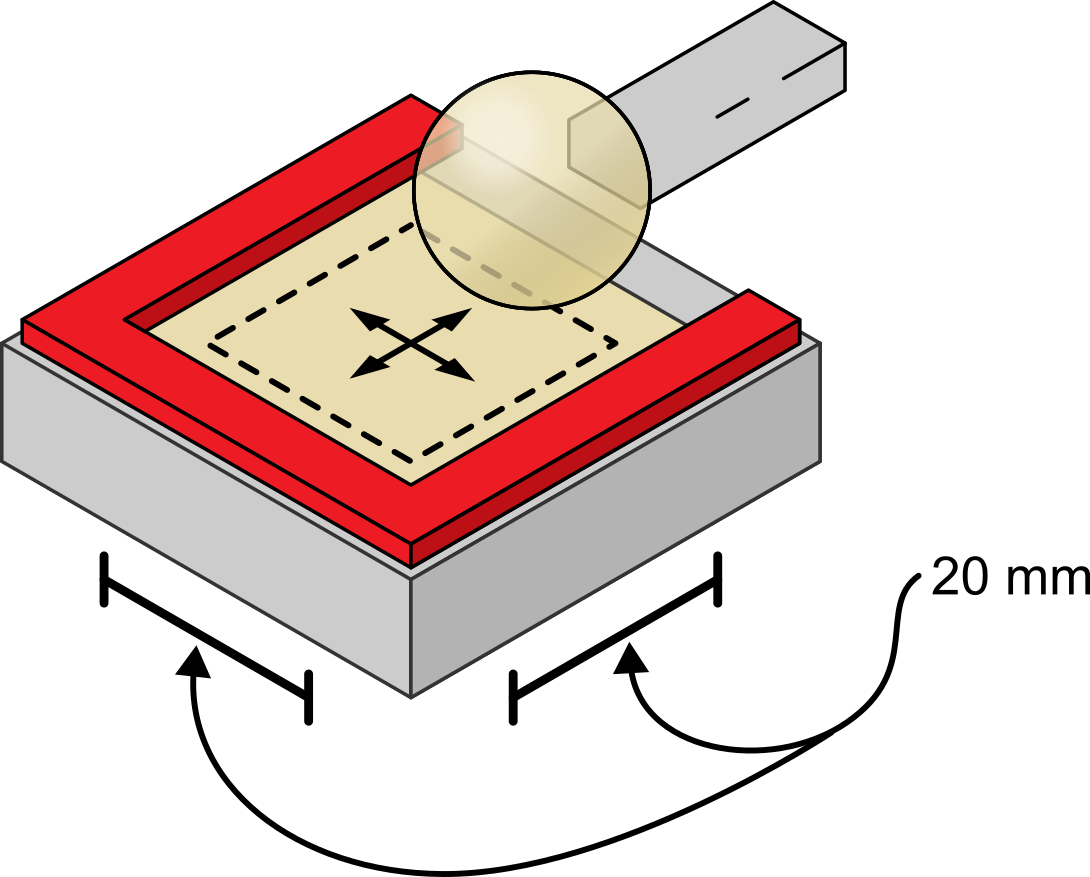
Figure 1: Diagram showing the test sample setup, with a PDMS ball loaded against a textured PDMS plate. The ball moves within an 20 × 20 mm area.
A controlled sequence of motion and loading is used to simulate the changing contact conditions experienced during oral processing. Friction is measured continuously throughout the sequence. The load and motion profile is shown in Figure 2.
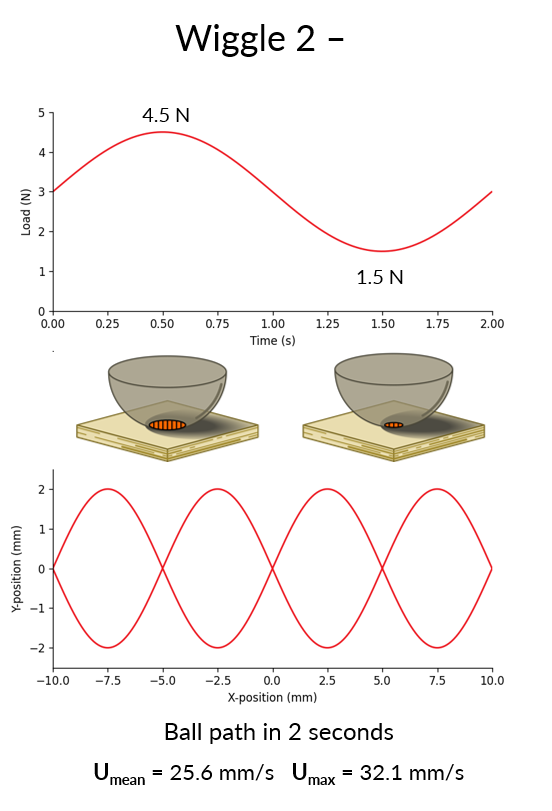
Figure 2: Diagram showing the test sequence used for studying mouthfeel friction.
Each sample is tested for 10 cycles (20 seconds) in total. This is repeated twice, for a total of 3 tests. Each repeat test uses fresh PDMS surfaces and bolus samples.
Samples
Five protein isolates , which include casein, pea, soy, whey and beef, were evaluated alongside deionised water and an artificial saliva mimic. The details of the samples are shown in Table 1.
| Label | Details | Supplier |
| Deionised water | Sigma-Aldrich | |
| Saliva Mimic | Thickened buffer solution, with similar pH and viscosity to human saliva | Ingram Tribology |
| Beef protein | Hydrolysed beef protein isolate (99%), Xanthan Gum | Myprotein |
| Soy protein | Soya protein isolate | Myprotein |
| Whey protein | Whey protein isolate (96%), Soya lecithin, sunflower lecithin | Myprotein |
| Pea protein | Pea protein isolate (100%) | Myprotein |
| Casein protein | Micellar casein (100%) | Myprotein |
The commercial protein products contained different secondary ingredients. The results therefore represent the complete products tested and should not be interpreted as a universal ranking of the protein sources themselves.
Simulated Bolus Preparation
Each protein product was tested as a simulated bolus. The protein powder was mixed with the saliva mimic at a concentration of 20% by weight using a controlled preparation procedure.
This approach produced repeatable test samples with controlled composition and handling history. The preparation method was designed to create conditions representative of a protein-containing bolus during oral processing.
The simulated bolus has a similar texture and particle size distribution to human bolus samples, along with a representative pH and viscosity.
Results
The friction values measured during the test sequence are shown in Figure 3. Each plotted value represents the average of the measured friction through each 2 second cycle. The error bars show the variation of the measured friction across the three tests.
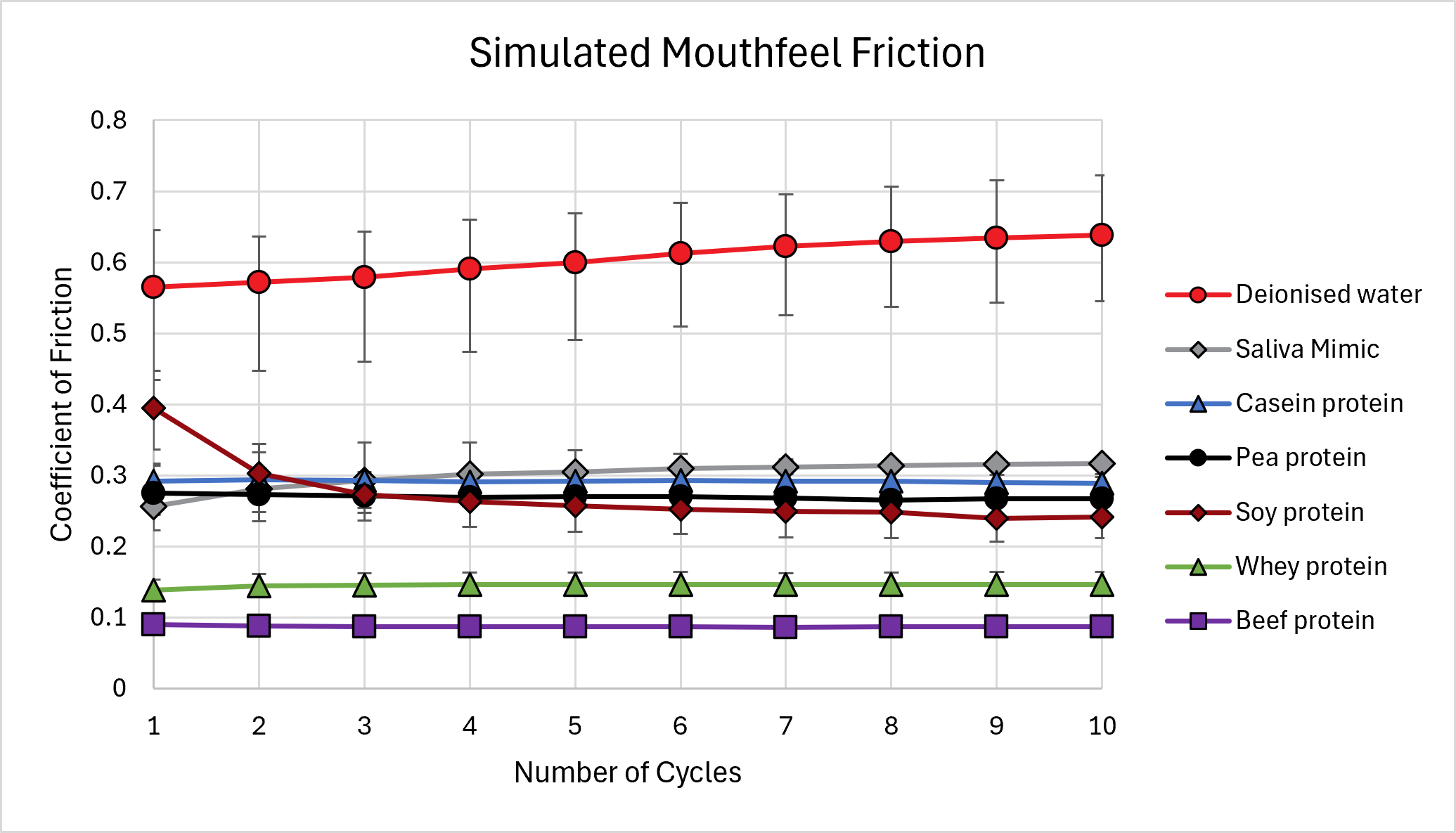
Figure 3: The measured friction in a simulated mouthfeel test sequence for different proteins
Deionised water has the highest friction, and is used here as a control. The Saliva mimic has a friction coefficient of about 0.3 in the contact. The addition of the proteins have the broad effect of lowering friction. Beef and whey protein show the lowest friction. The soy, pea and casein products were grouped more closely, with friction coefficients between 0.25 and 0.30.
Lower friction may be associated with sensations such as increased slipperiness or smoothness, while higher friction may contribute to perceptions such as dryness, drag or astringency. However, instrumental friction results should be interpreted alongside other properties, including viscosity, particle size, composition and sensory-panel data.
What Do These Results Mean for Food Formulators?
Instrumental mouthfeel testing provides a repeatable way to compare candidate ingredients and formulations under controlled conditions, without the variability of panel testing.
For protein-rich and alternative-protein products, the method can be used to:
- rank potential protein ingredients
- assess the effect of stabilisers, fats, emulsifiers or processing conditions
- investigate causes of dryness or astringency
- compare reformulated products with an existing benchmark
- reduce the number of formulations progressing to sensory trials
- support relationships between instrumental measurements and sensory descriptors
This technique is particularly useful where small formulation changes produce sensory differences that are difficult to explain using viscosity measurements alone.
Summary
Ingram Tribology’s Food Mouthfeel and Oral Friction Testing method successfully distinguished between the lubrication behaviour of the protein products examined in this study.
The results demonstrate how simulated oral-friction measurements can provide objective evidence of formulation differences and help food developers design products with more desirable mouthfeel.
Instrumental testing is not a replacement for sensory evaluation. Instead, it provides complementary, repeatable data that can help explain sensory results, screen ingredients and guide formulation development.
Discuss Your Mouthfeel Testing Project
Ingram Tribology provides confidential mouthfeel and oral-friction testing for foods, beverages, ingredients and formulated products.
We can help compare ingredients, benchmark products, investigate undesirable sensory properties and develop test programmes tailored to specific formulation challenges.
Further Reading
(1) Brown, F. et al. Food Research International 209 (2025) 116322